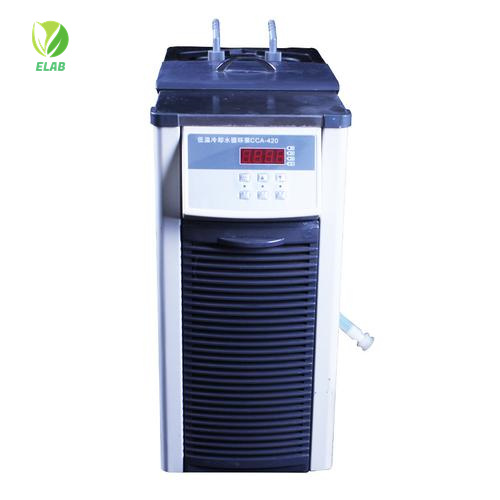
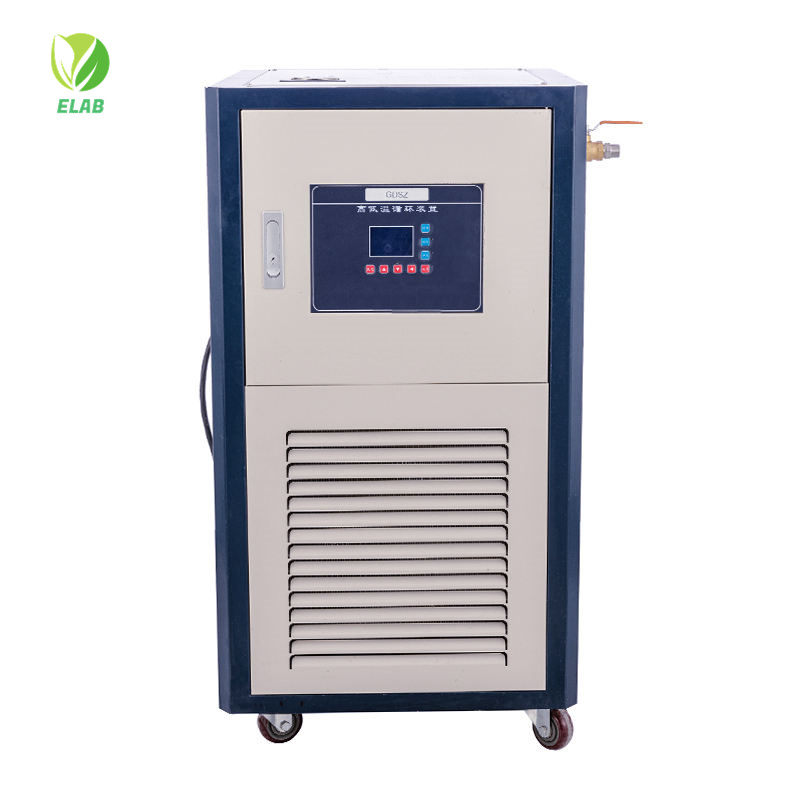
A heating and cooling circulator is an industrial or laboratory device that is capable of providing a wide range of temperature control. This device typically contains a reservoir that regulates the temperature of the sample and circulates the liquid internally and externally via a built-in pump. According to the search results, these circulators can be used for application temperatures ranging from -28°C to 150°C.
In a hydronic heating system, hot water is piped from a heat source (such as a boiler) to radiators, where the convection properties of the radiators transfer heat from the hotter radiator to the cooler air. The function of a heating and cooling circulator or "circulator" is to create pressure and flow to move the water from the boiler to the radiator.
The working principle of a circulator typically involves an electric motor connected to an impeller that is mounted inside a spiral housing. The rotation of the impeller draws water into the inlet side of the housing, and the blades of the impeller push the water toward the spiral housing and the outlet of the housing.
The difference between a circulator and a pump is that a heating and cooling circulator generally refers to a small device installed in a closed fluid system in residential and light commercial applications. Whereas pumps are usually larger devices that move larger volumes of water in larger commercial piping systems, which can be open or closed.
Types of circulators include wet rotor and dry rotor designs. In a wet rotor circulator design, the entire rotor, including the motor rotor, is immersed in the fluid being pumped, which acts as a coolant for the motor. In a dry rotor circulator pump, the motor rotor does not come in contact with the fluid. Dry rotor designs are serviceable and can have a long service life. The motor is air cooled by a fan mounted on the end of the motor shaft.
In addition, there is the distinction between standard induction motors and electronically commutated (ECM) motors. ECM motors use single-phase AC power, but the electronics convert the current to DC, which then sends positive and negative DC current pulses to selected electromagnetic coils in the stator, which are positioned around the rotor, which is equipped with permanent magnets. The coils, depending on how they are charged, either push the shaft away or pull the shaft toward them, causing the shaft to turn. The operation of the motor is controlled by software, which has the flexibility to run at any speed within a certain range and can change speed based on logic inputs.
Circulators can be classified as single speed, three speed, or variable speed. Single speed circulators use a standard induction motor, the motor runs at a single speed and the circulator operates at the flow/head duty point. Three speed circulators use an induction motor with special stator windings that allow the user or installer to control the speed using a simple three way switch. Variable speed circulators typically use an ECM motor, and speed modulation is controlled by adjusting the user interface or sometimes by an external control signal.
Wonderful! Share this Blog: