The vacuum filter used in the laboratory is a device that achieves solid-liquid separation or gas-liquid separation through vacuum negative pressure. It is widely used in the fields of chemistry, biology, and pharmaceuticals. The following is relevant information about vacuum filters used in laboratories:
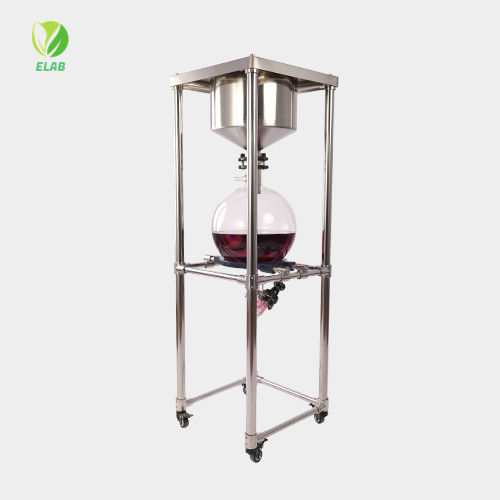
Working principle
The vacuum filter uses a vacuum pump or other vacuum equipment to create a negative pressure environment, allowing the mixture to pass through the filter medium (such as filter paper, filter membrane, etc.) under the action of negative pressure. Solid particles are retained by the filter medium due to their large volume, forming a filter cake, while liquid substances pass through the filter medium smoothly and enter the collection container.
Main components
1. Vacuum pump: Provides negative pressure to drive the liquid through the filter membrane.
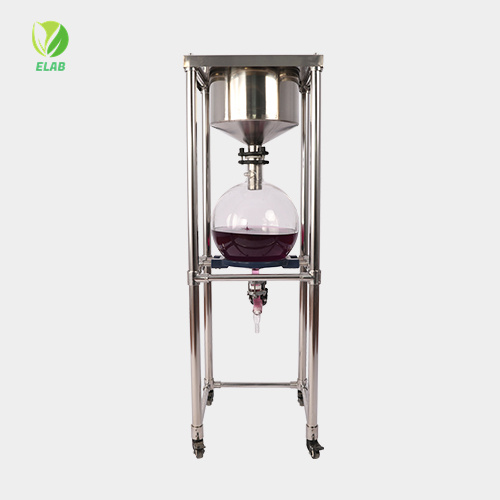
2. Filter bottle (receiving bottle): Used to collect filtered liquid.
3. Filter funnel: Place the filter membrane, common ones are Buchner funnel, sand core funnel, etc.
4. Filter membrane: Select filter membranes of different materials and pore sizes according to experimental requirements, such as polyethersulfone (PES), polytetrafluoroethylene (PTFE), etc.
5. Sealing gasket: Ensure the seal between the filter funnel and the filter bottle.
6. Vacuum tube: Connect the vacuum pump and the filter bottle.
Application scenarios
1. Sample clarification: Remove particulate matter from liquid samples, suitable for chemical analysis, biological experiments, etc.
2. Microbial detection: Used for microbial filtration and detection in samples such as water, food, and medicines.
3. Sterile filtration: Used to remove bacteria and other microorganisms in pharmaceutical and biological experiments.
4. Particle analysis: Used for environmental monitoring and industrial quality control.
5. Cell culture: Used for filtering cell culture media to remove impurities and microorganisms.
6. Solvent filtration: Used for solvent filtration before analysis such as high-performance liquid chromatography (HPLC).
Selection points
1. Filter membrane material: Select the appropriate filter membrane material according to the chemical properties of the sample and experimental requirements.
2. Filter membrane pore size: Different pore sizes are suitable for different filtration requirements, such as 0.22 µm pore size is suitable for sterilization filtration.
3. Vacuum pump type: Select a suitable vacuum pump according to the chemical properties of the sample, such as a corrosion-resistant vacuum pump, an oil-free vacuum pump, etc.
Precautions for use
1. Ensure that all joints of the device are well sealed to avoid air leakage.
2. Avoid exceeding the rated pressure of the device to prevent the filter membrane from rupturing or the device from being damaged.
3. The device should be thoroughly cleaned before and after use to prevent cross contamination.
Laboratory vacuum filters have become an important tool in laboratory research with their advantages such as fast, efficient, flexible and accurate.
Wonderful! Share this Blog: