Full Life Cycle Management of Cooling Systems Through Intelligent Laboratory Chiller Unit Integration
Modern research facilities increasingly demand precise thermal control with minimal downtime, making comprehensive cooling system management essential. Traditional approaches rely on reactive maintenance and fixed schedules, resulting in inefficiencies and premature equipment failure. The integration of an intelligent laboratory chiller unit revolutionizes this paradigm by enabling full life cycle management that spans design, operation, maintenance, and eventual system evolution.
During the initial commissioning phase, an intelligent laboratory chiller unit employs IoT-enabled sensors and digital twin modeling to simulate performance across variable load scenarios. This predictive capability ensures optimal sizing and configuration before physical installation, eliminating guesswork. Advanced diagnostics automatically validate system performance against design specifications, confirming the laboratory chiller unit achieves target coefficient of performance (COP) and temperature stability from its first operational hour.
Throughout the operational phase, continuous monitoring distinguishes intelligent systems from conventional equipment. The laboratory chiller unit tracks real-time metrics including compressor efficiency, refrigerant pressure differentials, heat exchanger fouling factors, and ambient condition impacts. Machine learning algorithms analyze this data stream to detect subtle performance degradation, automatically adjusting setpoints to maintain ±0.1°C accuracy while minimizing energy consumption. This adaptive optimization can reduce operational costs by 15-25% compared to static-control systems.
Predictive maintenance represents the cornerstone of extended equipment lifespan. The intelligent laboratory chiller unit monitors vibration signatures, motor current patterns, and thermal cycling data to forecast component failures weeks in advance. This transforms maintenance from calendar-based interventions to condition-triggered actions, reducing unplanned downtime by over 60%. Remote diagnostic capabilities enable technicians to perform troubleshooting and software updates without disrupting critical experiments, while modular design facilitates targeted component replacement rather than complete system overhauls.
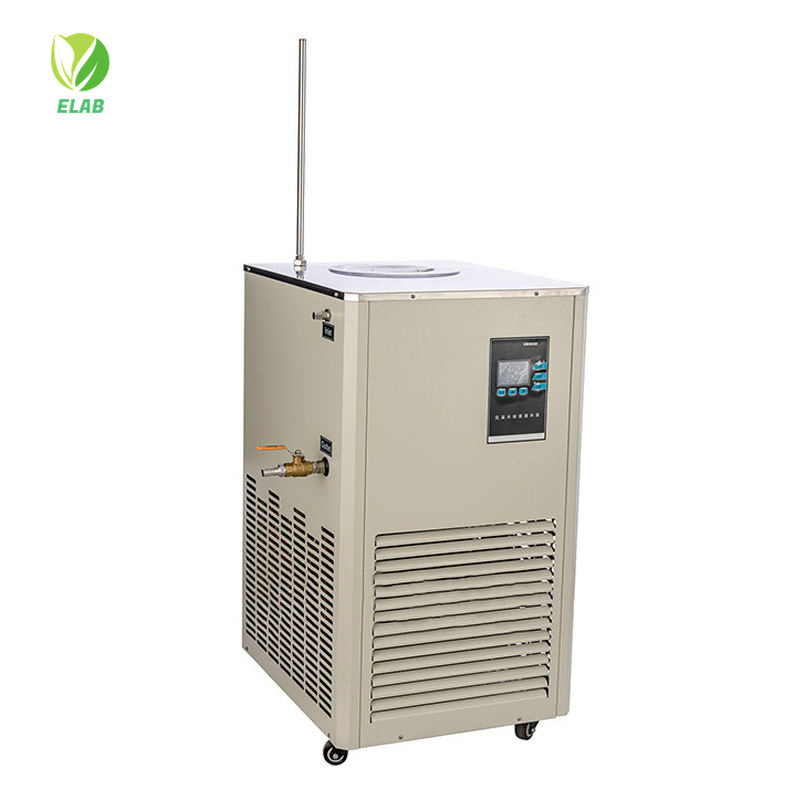
Performance analytics throughout the service life support data-driven capital planning. Comprehensive logging tracks the ZZELAB laboratory chiller unit efficiency trends against original equipment manufacturer (OEM) baselines and facility requirements. When performance margins narrow, the system identifies whether retrofits—such as variable-frequency drive upgrades or refrigerant replacements—can restore efficiency cost-effectively. This approach extends operational lifespan beyond 15-20 years while ensuring cooling capacity evolves alongside expanding research demands. By embedding intelligence at the core, facilities achieve holistic life cycle management that maximizes ROI, ensures regulatory compliance, and maintains uninterrupted scientific productivity.
Wonderful! Share this Blog: