Different Types of high Borosilicate Reactors in Chemical Process Industries
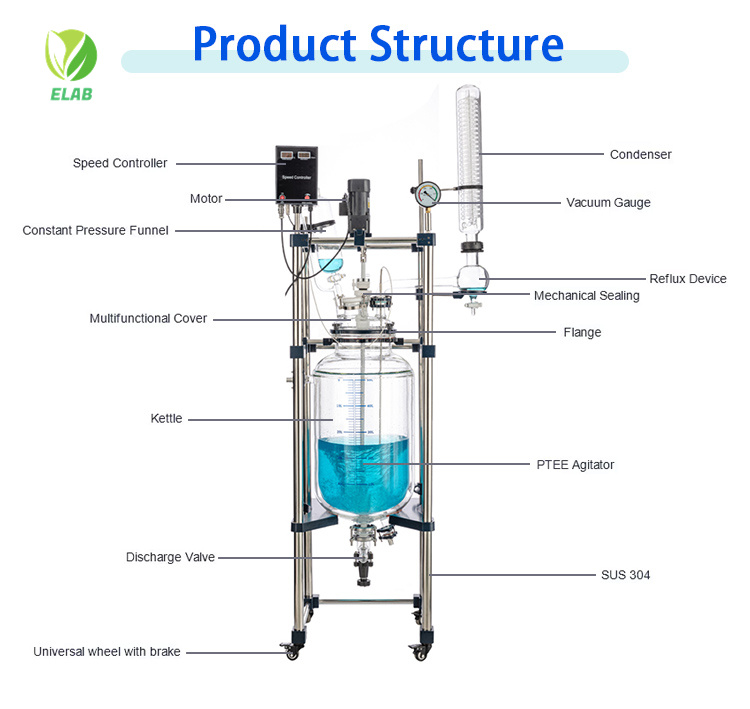
High-grade borosilicate reactors, commonly known as high borosilicate reactors, are indispensable vessels in modern chemical process industries. Fabricated from premium Borosilicate Glass 3.3, these reactors offer exceptional thermal shock resistance, chemical inertness, and visual process control, making them ideal for applications ranging from laboratory research to pilot-scale production .
Jacketed Reactors: The Industry Workhorse
The most widely used high borosilicate reactors are jacketed designs, available in single and double-layer configurations. Single-jacketed reactors feature an outer glass layer that circulates heating/cooling fluids, enabling precise temperature control from -60°C to +200°C . Double-jacketed variants provide enhanced insulation for extreme temperature processes, minimizing heat loss during extended reactions. These reactors are essential for processes like polymerization, crystallization, and biochemical synthesis where thermal regulation is critical .
High-Pressure and Specialized Configurations
For reactions requiring elevated pressures, high-pressure high borosilicate reactors are engineered to withstand conditions beyond atmospheric limits while maintaining visibility. These units are crucial for hydrogenation, catalytic reactions, and certain polymerization processes . Vacuum reactors operate under reduced pressure for distillation and degassing of volatile compounds, preventing thermal degradation of sensitive products. Other specialized types include photochemical reactors equipped with UV/visible light sources for light-activated syntheses, and continuous flow reactors that enable steady-state production with high throughput .
Scale-Based Classification
high borosilicate reactors are categorized by capacity to meet diverse industrial needs. Laboratory-scale reactors (50ml–30L) support research and process development with full transparency for real-time observation . Pilot-scale systems (50–200L) bridge the gap between R&D and commercial production, offering modular designs with multiple ports for sensors, sampling devices, and automated controls . These scalable solutions allow seamless technology transfer while maintaining the corrosion resistance and non-reactive properties critical for pharmaceutical and fine chemical manufacturing .
Key Advantages in Chemical Processing
The transparency of high borosilicate reactors provides unparalleled visual monitoring of stirring uniformity, color changes, and phase separations, enhancing both safety and process optimization . Their chemical resistance to acids, alkalis, and organic solvents ensures product purity, while the hydrophobic surface facilitates easy cleaning between batches . Although pressure ratings are typically limited to 0.5 bar, strategic reinforcement with PTFE components and stainless steel supports enables safe operation under vacuum and slight overpressure .
In conclusion, high borosilicate reactors represent a versatile, reliable solution for chemical process industries, offering various configurations tailored to specific reaction requirements while maintaining the material integrity and visibility that Borosilicate Glass 3.3 uniquely provides.different types of hgh borosilicate reactors used in chemical process industries
Wonderful! Share this Blog: