A distillation rotary evaporator is an essential laboratory instrument designed for the efficient and gentle removal of solvents from samples through controlled evaporation. This sophisticated device, commonly called a rotovap, combines reduced pressure, rotational motion, and controlled heating to perform distillation at significantly lower temperatures than traditional methods, making it indispensable in modern chemical research.
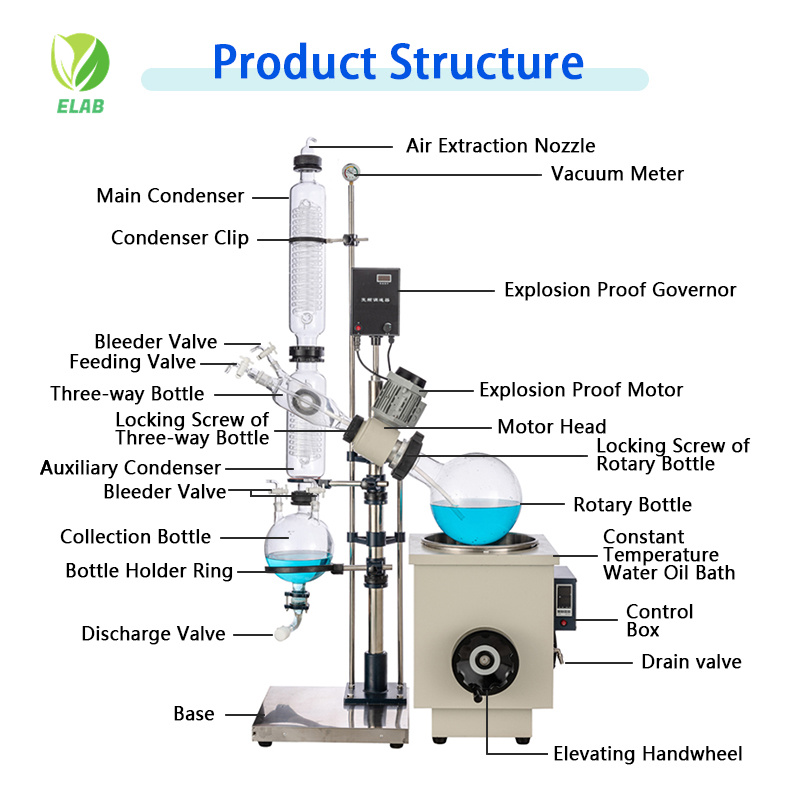
The primary function of a distillation rotary evaporator involves creating a vacuum environment that substantially lowers the boiling point of solvents. A precision motor rotates the evaporation flask at constant speeds between 100-200 revolutions per minute, spreading the liquid as a thin film across the flask's interior surface. This thin film formation dramatically increases the surface area available for evaporation while a heated water or oil bath provides gentle, consistent thermal energy. As the solvent evaporates at reduced temperatures, the vapor travels through a specialized vapor duct to an efficient condenser system, where it is cooled and collected in a receiving flask, leaving behind the concentrated sample material.
In practical applications, the distillation rotary evaporator serves numerous critical functions across chemistry, pharmaceuticals, and biotechnology sectors. Research chemists utilize it to concentrate reaction mixtures, purify synthesized compounds, recycle expensive solvents, and prepare analytical samples. It proves particularly valuable when processing heat-sensitive materials such as natural product extracts, essential oils, pharmaceutical intermediates, and biological macromolecules, as the low-temperature operation prevents thermal degradation and preserves the integrity of delicate compounds.
The advantages of employing a distillation rotary evaporator are substantial compared to conventional static distillation equipment. The rotational mechanism accelerates processing times significantly through enhanced surface area exposure. Precise control over both temperature and vacuum levels enables selective solvent removal when working with complex mixed-solvent systems. Furthermore, the sealed system design minimizes operator exposure to potentially hazardous vapors while maximizing solvent recovery rates, contributing to both laboratory safety and environmental responsibility.
Successful operation requires meticulous attention to multiple parameters. The vacuum level must be carefully matched to the specific solvent's boiling characteristics, while bath temperature should remain at least 20°C below the sample's decomposition threshold. Rotation speed demands optimization—insufficient speed reduces efficiency, while excessive velocity may cause sample bumping or foaming. Regular inspection and maintenance of vacuum seals, joints, and glassware ensure consistent performance and prevent costly sample loss.
Modern laboratories fundamentally depend on the distillation rotary evaporator for its unique combination of efficiency, precision, and sample preservation. Whether in academic research institutions or industrial production facilities, this versatile instrument has become irreplaceable for routine solvent removal, enabling scientists to handle valuable materials with maximum care while achieving rapid, reproducible results that advance chemical innovation.
Wonderful! Share this Blog: