In the fast-paced world of new materials development, people often focus on the eye-catching final products: ultra-light aerogels used in airplanes, flexible conductive films for smart wearables, or high-performance polymers found in electric cars. Yet behind every successful material lies a careful process of making, cleaning, and perfecting. Operating quietly at the heart of this process is a piece of equipment that is indispensable to the materials scientist: the lab rotary evaporator. Far from being a simple tool for solvent removal, it has evolved into a critical platform for precision engineering at the molecular level.
The primary application of a lab rotary evaporator in this field lies in the purification of advanced functional materials. When synthesizing novel compounds like Metal-Organic Frameworks (MOFs) or covalent organic frameworks (COFs)—materials celebrated for their porosity and surface area—the removal of high-boiling-point solvents without degrading the delicate crystalline structure is paramount. Old‑fashioned distillation often uses too much heat, which can ruin these delicate structures. The lab rotary evaporator, by using lower pressure, steady heating, and constant spinning, lets solvents evaporate gently and quickly without high temperatures. This keeps the material intact, giving a pure result that works well for things like gas storage or speeding up chemical reactions.
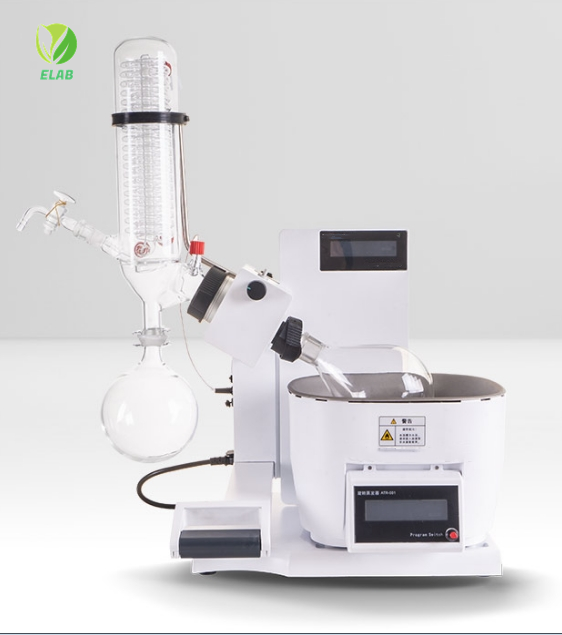
Furthermore, the lab rotary evaporator is a key instrument in the development of next-generation energy storage materials. In the production of lithium-ion battery components, such as solid-state electrolytes or silicon-based anodes, the process often involves synthesizing precursors in volatile organic solvents. Even a tiny bit of leftover solvent can hurt the battery cell's stability and make it less safe. Researchers count on the lab rotary evaporator to get a powder that's reliably dry, with no solvent left behind. Getting it this precise is key to making sure the electrode coatings are even, which directly affects how long the battery lasts and how much power it holds.
Beyond just cleaning things up, this tool is also a key player in making materials more sustainable. The new materials field is paying more and more attention to eco‑friendly practices. Because a lab rotary evaporator works as a closed system, it can efficiently capture and reuse expensive or harmful solvents. This not only cuts down the environmental impact of research and development, but also makes it much cheaper to scale up new materials from the lab to trial production.
In conclusion, while the lab rotary evaporator may not be the most glamorous piece of equipment in a cutting-edge materials lab, its role is undeniably foundational. By enabling gentle purification, ensuring material stability, and promoting sustainable practices, it provides the critical link between molecular design and real-world application. As the demand for high-performance, sustainable materials continues to grow, the lab rotary evaporator will remain an essential partner in the journey of innovation, quietly but powerfully driving the future of the industry.
In the end, while the lab rotary evaporator might not be the flashiest tool in a high‑tech materials lab, its role is truly essential. By handling purification gently, keeping materials stable, and supporting eco‑friendly practices, it serves as the vital bridge between designing molecules and putting them to real‑world use. As the need for high‑performance, sustainable materials keeps growing, the lab rotary evaporator will stay a trusted partner in the innovation journey—quietly but powerfully shaping the future of the industry.
Wonderful! Share this Blog: