In pesticide R&D, glass reactors are used across the whole scale‑up journey, from lab‑scale trials to pilot runs. Simply put, the lab‑scale stage is for figuring out and fine‑tuning the process, while the pilot stage is for testing and scaling it up, giving a solid blueprint for full‑scale industrial production.
Pilot-scale Stage: The Process "Designer"
In the pilot-scale stage, glass reactors are the primary tool for researchers to explore the unknown and optimize conditions, where their transparent and visible characteristics are fully utilized.
Core Task: Exploring and optimizing synthetic routes. Researchers will repeatedly experiment with the synthesis process of new pesticide molecules in 1L-20L glass reactors.
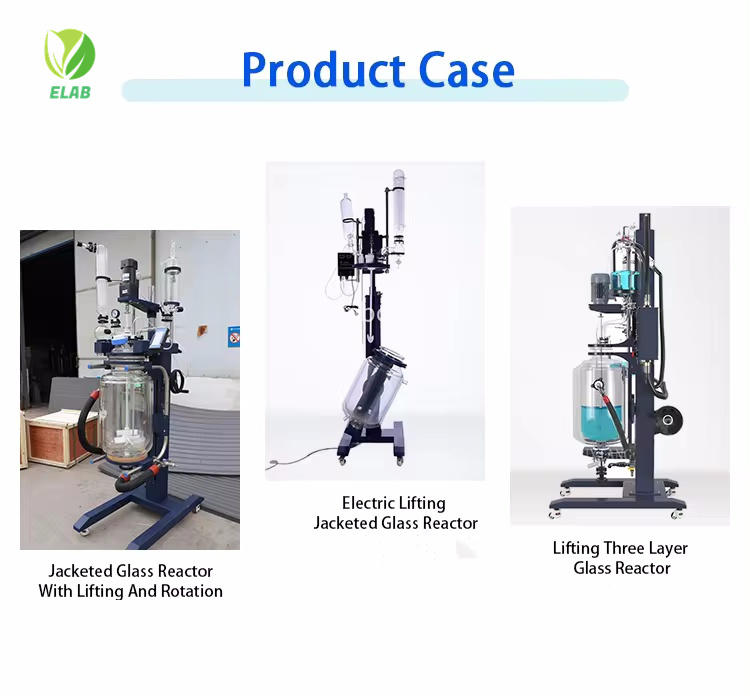
Here's a more natural, everyday version of your text, keeping the meaning and total word count nearly the same:
Key Uses:
Checking if a Reaction Works: With a clear reactor, you can directly watch how the reaction mix looks—its color and physical state—during steps like reflux, distillation, or under normal or vacuum pressure. This helps you tell if things are going as planned.
Fine‑Tuning the Process: You can accurately lock in key details like the best reaction temperature, how much of each ingredient to add, how fast to stir, and the drip rate for adding raw materials.
Dealing with Purification Problems: For products that tend to cause issues when being separated and purified, a glass reactor lets you combine crystallization, filtering, and washing in one setup. This way, you can study fixes early on.
Main Benefits: The borosilicate glass (like G3.3) stands up to corrosion really well, and you can see everything happening inside—something stainless steel gear just can't match.
Pilot-Scale Stage: The "Touchstone" of the Process
Pilot-scale testing serves as a bridge between the laboratory and industrial production. This stage primarily utilizes 20L-200L or even larger pilot-scale glass reactors to expose and resolve potential problems during scale-up.
Core Task: Simulating industrial production to verify the feasibility of the small-scale process. At this stage, the equipment's functions and configuration will align with industrial reactors; for example, explosion-proof designs will be adopted, and mechanical seals consistent with industrial production will be installed to handle larger batches of flammable and explosive materials.
Here's a more natural, everyday version of your text, keeping the meaning and total word count nearly the same:
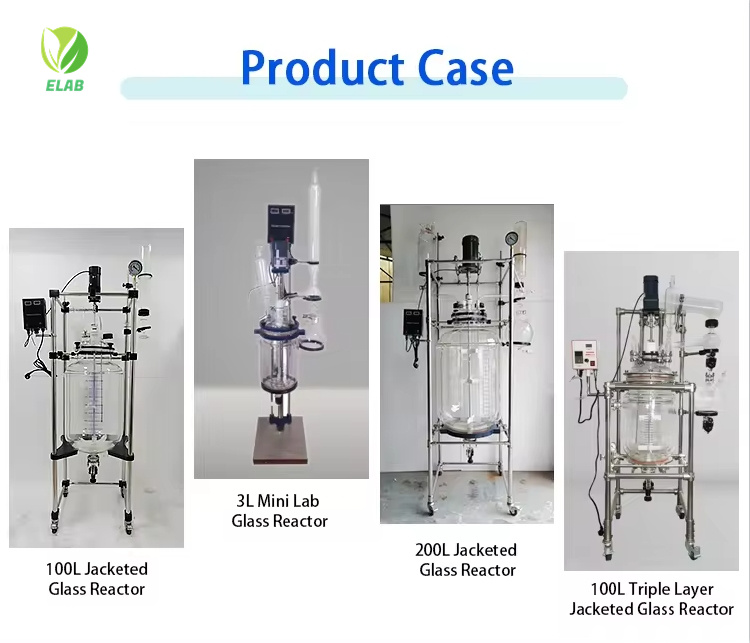
Key Uses:
Checking the "Scale‑Up Effect": Reactions that work great in small batches can sometimes change their behavior or create more impurities when scaled up, because mixing and heat transfer aren't as efficient. With a pilot‑scale reactor, you can spot these issues early and fix them—for example, by tweaking the stirring speed.
Tackling Practical Problems: Figuring out and solving the kind of challenges that come up in full‑scale production, like how to safely add solid materials into the reactor, rather than just "pouring them in from the flask" like you would in a small lab trial.
Testing Operating Steps: Running the whole process just like you would on the factory floor, following the Standard Operating Procedures (SOPs)—including reaction, distillation, and solvent recovery—and checking how longer run times affect product quality.
Core Value: Pilot‑scale glass reactors keep the benefit of being clear so you can see what's happening, while their size and output give you trustworthy data for scaling up. A typical 50L pilot‑scale glass reactor can handle 50‑150 tons per year—enough to prove whether the process is commercially viable.
Wonderful! Share this Blog: