Selecting the right agitator is one of the most critical decisions when setting up a glass reactor. The correct choice ensures optimal mixing, efficient heat transfer, and successful reaction outcomes. The agitator system, which includes the motor, shaft, and impeller, directly influences how well the glass reactor handles different materials and process conditions.
So, before you even look at agitator options, really get to know what you're putting inside your glass reactors. Are you dealing with runny liquids or thick, gooey stuff? The thickness of your mixture is the single biggest clue for picking the right mixer, because it completely changes what kind of spinning action your glass reactors actually need to do a good job.
For ow-viscosity fluids such as aqueous solutions or organic solvents, a pitched-blade or propeller-type agitator is often ideal for glass reactors. These designs generate strong axial flow, creating the turbulence needed for efficient mixing in less viscous media.
When your recipe is on the thicker side—like heavy oils, sticky resins, or polymer goop—you'll want to go with an anchor-style agitator for your glass reactors. This type scrapes close to the wall, which not only moves the thick stuff around but also helps transfer heat in and out, all while spinning at a gentle, steady pace. For everything in the middle, a simple paddle works fine for gentle blending, while turbine impellers bring the muscle when you need to break things up or disperse solids inside your glass reactors.
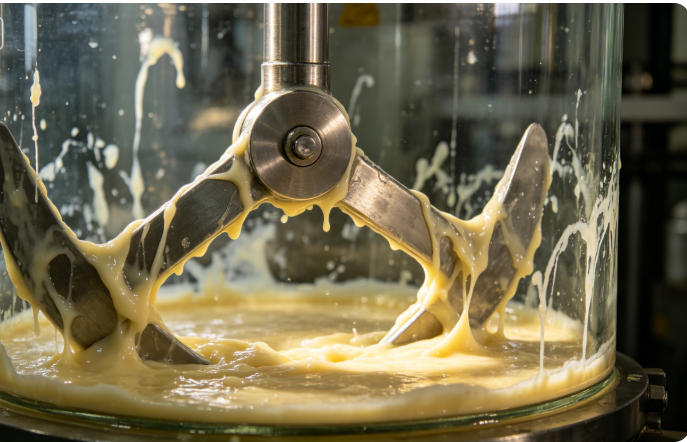
Evaluate Key Agitator Parameters
Beyond the impeller type, the agitator's power and torque are essential technical parameters. In glass reactors, torque is often more important than rated power. High torque ensures the motor can maintain its speed even as the mixture thickens, preventing stalling during critical phases like crystallization. A good practice is to choose a motor with about 20-30% more torque than your calculated need.
The shaft thickness is another practical detail that really matters for your glass reactors. A thicker rod—say, 15mm instead of 12mm—keeps everything more rigid and steady. This becomes a big deal when you're running larger glass reactors (think 30 liters and up) with heavy blades in viscous batches, because it cuts down on wobbling and wear and tear over time.
Consider Impeller Design and Flow Patterns
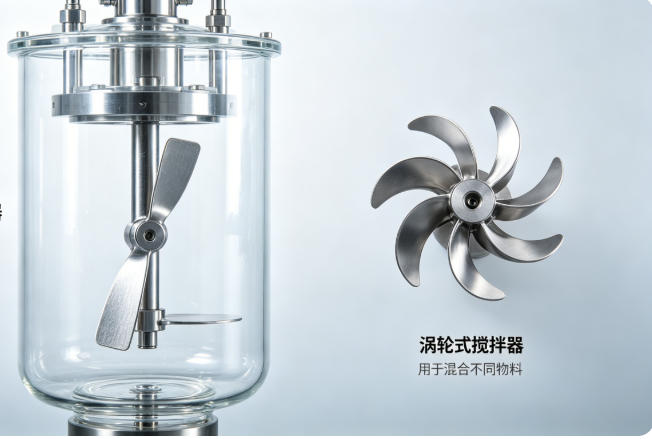
The desired flow pattern—axial, radial, or a combination—is key to uniform mixing and temperature distribution within the glass reactor.
For good heat transfer, especially in jacketed glass reactors, you need the agitator to push the liquid toward the walls so the jacket can actually do its job. That's exactly why anchor mixers are so popular for chunky or thick stuff in glass reactors—they keep the product moving against the heated or cooled surface.
To further enhance performance, many modern glass reactor systems allow you to interchange agitators. This flexibility enables a single glass reactor to switch between a pitched-blade impeller for thin solutions and an anchor impeller for thick slurries, adapting to various processes.
Factor in Safety and Equipment Compatibility
The agitator choice also has safety implications. When working with flammable solvents in your glass reactor, an explosion-proof motor and control system are essential.
Also, pay attention to the seals and coatings on your agitator. If you're running harsh or corrosive chemicals, PTFE-coated impellers are a smart, safe bet for glass reactors because they resist attack from acids and solvents. And don't forget the baffles—those little fins inside the vessel. They stop the liquid from just spinning in a whirlpool and actually help the agitator mix more thoroughly, sometimes cutting your blend time by a third or more.
Wonderful! Share this Blog: