For laboratories and pilot plants engaged in chemical synthesis, pharmaceutical development, or materials science, selecting the right glass reactor is a critical step. A well-chosen reactor ensures efficient processes, operator safety, and reliable scale-up. The configuration of lab glass reactors is diverse - from single-layer jackets to double-layers jacket designs, from desk units to industrial-scale systems - understanding your application requirements is the first step in making a good choice.
The most important consideration is the reaction environment.Lab glass reactors are favored because of their transparency, allowing for real-time observation of processes such as color changes,crystallization, mixing, and phase separation. If your process involves corrosive reagents or requires strict inert conditions, borosilicate glass (typically 3.3) becomes the standard material because of its good thermal shock resistance and chemical inertness. When evaluating lab glass reactors, make sure that all components in contact with liquids, including the reactor cover, baffles, and immersion tubes, are made of compatible materials (such as PTFE or advanced fluoropolymers) to prevent degradation.
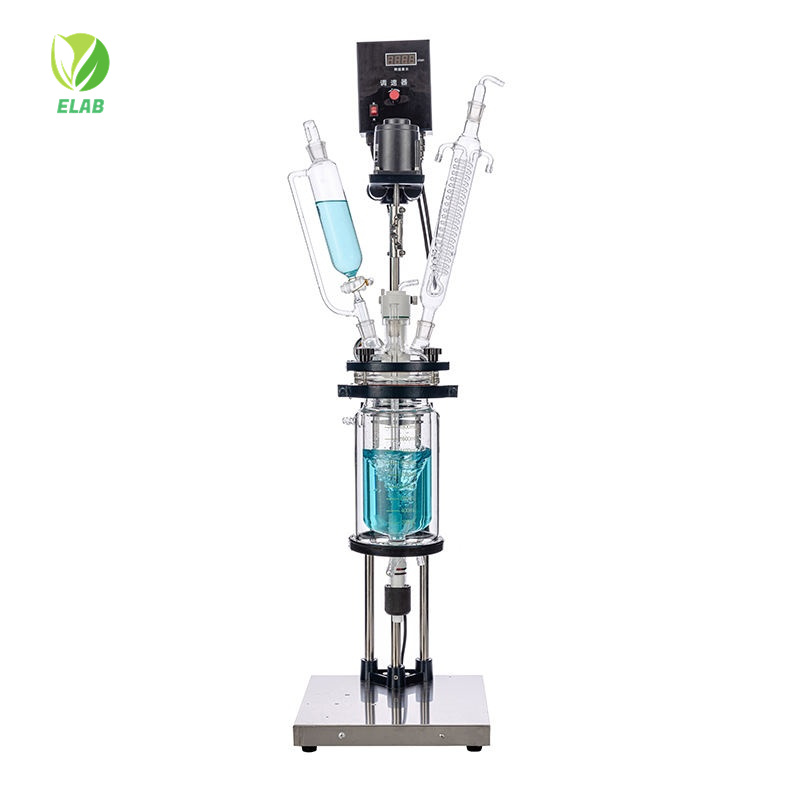
Temperature control is another crucial factor. Most glass reaction vessel systems adopt a jacketed design, with a heat-conducting fluid circulating within it to achieve precise temperature control. For processes requiring fast heating or cooling, double-jacketed glass reaction vessels with an additional vacuum layer can offer superior insulation and thermal efficiency. On the other hand, for applications with less demanding requirements, a single-jacketed device might be sufficient. It is essential to ensure that the jacket configuration matches the capacity and connection specifications of your existing heating and cooling system to avoid bottlenecks.
The ability to stir and mix directly affects the uniformity of the reaction. Glass reaction vessels should be equipped with a top-mounted stirrer, whose speed and torque should be matched to your viscosity range and mixing intensity. Various options such as anchor, turbine, or inclined blade impellers can meet different fluid characteristics requirements - from low viscosity solutions to high viscosity resins. Moreover, when dealing with flammable solvents or operating in specific environments, functions such as variable speed control, digital torque reading, and explosion-proof motors are crucial.
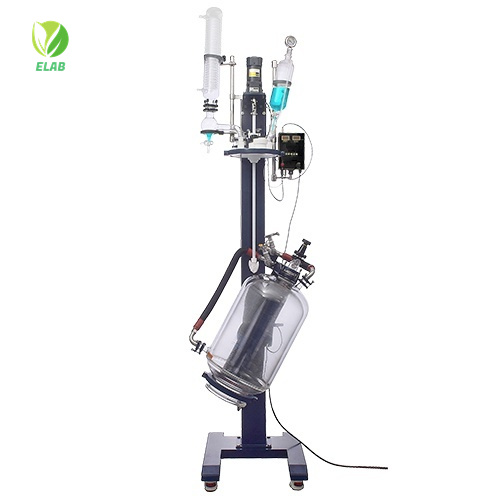
Safety and scalability must not be overlooked. A truly robust glass reactor system is built around rupture discs, pressure relief valves, and glass components that have been rigorously tested to reliably withstand specified pressure and vacuum limits. For the transition from research and development to production processes, choosing a glass reaction vessel with a universal framework and interchangeable container sizes (such as 5L, 10L, 20L ,30L or 50L) allow for seamless scaling without the need to redesign the entire system. Similarly, standardized flange connections (such as DIN ) simplify the integration with condensers, feeding funnels, and downstream equipment.
Finally, assess the supporting infrastructure: PLC automation, data logging, and ergonomic design that facilitates cleaning and maintenance. A meticulously designed glass reactor platform enhances reproducibility while minimizing downtime.
In conclusion, the selection of a lab glass reactor should be guided by a thorough assessment of material compatibility, thermal management, stirring performance, safety features, and scalability. By tailoring these factors to your specific application—from academic research to commercial manufacturing—you invest in a glass reactor that guarantees consistent performance, operational safety, and long-term return on investment.
Wonderful! Share this Blog: