Three-layer glass reactors are versatile instruments that can be applied to a wide range of specific experiments. In the field of organic chemistry, they are ideal for conducting esterification reactions. The inner layer of the three-layer glass reactor holds the reactants, while the middle jacket layer can be filled with heating or cooling media to precisely control the reaction temperature. This ensures that the esterification process proceeds smoothly and efficiently, yielding high-quality ester products.
In addition to organic synthesis, three-layer glass reactors are also used in polymerization experiments. For example, when synthesizing polymers, the vacuum insulation layer of the three-layer glass reactor helps maintain a stable temperature and pressure environment. This is crucial for the polymerization reaction, as it allows for better control over the molecular weight and properties of the resulting polymer.
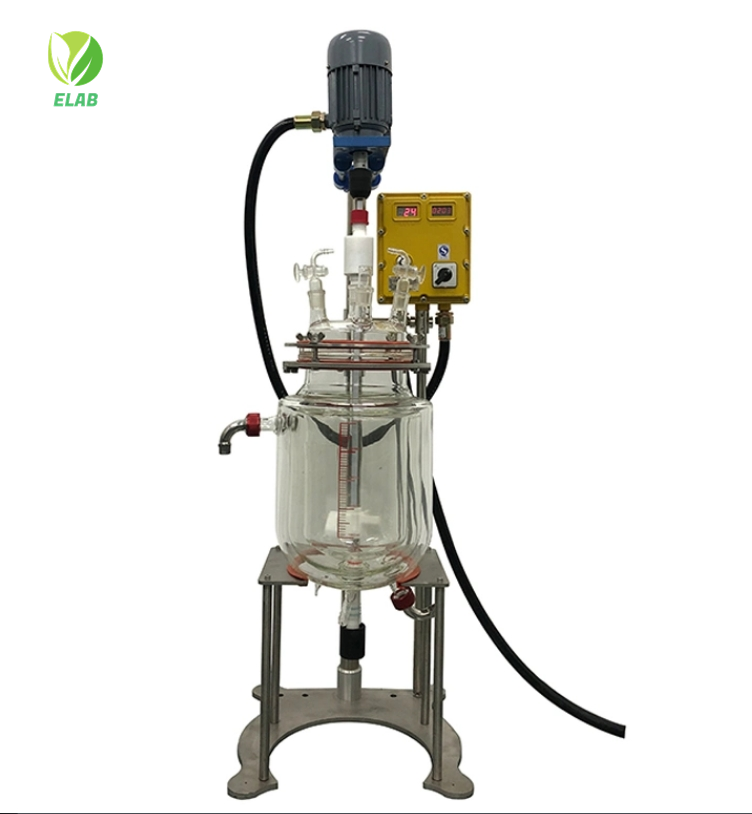
Three-layer glass reactors are also valuable in the pharmaceutical industry. They can be used for the preparation of active pharmaceutical ingredients (APIs). The transparent nature of the glass allows researchers to visually monitor the reaction progress, such as the color change of the solution, which is important for optimizing the reaction conditions and ensuring the quality of the API.
Moreover, three-layer glass reactors can be employed in the study of catalytic reactions. Researchers can place catalysts and reactants in the reactor and adjust the temperature and pressure as needed. The three-layer glass reactor's ability to provide a stable and controlled environment is essential for investigating the catalytic activity and selectivity of different catalysts under various conditions.
In summary, three-layer glass reactors are indispensable tools in many laboratories. Their unique three-layer design offers excellent temperature control, vacuum insulation, and visual monitoring capabilities. These features make them suitable for a variety of experiments, including esterification, polymerization, pharmaceutical synthesis, and catalytic research.
Wonderful! Share this Blog: